The bike: A 1977 R100S sold as a 1978 model.
The issue: Oil weep around the push rod grommet, right-side exhaust. Or so I thought.
Initially diagnosed and corrected was a too deeply set oil filter canister that did not provide enough crush to the large o-ring seal. After measurements and doing the math, an extra shim and a new paper gasket were installed. Oil weep reduced but not eliminated. Must be the grommet. Time to remove both left and right top ends. False economy to do just one side.
Examining the right-side push rod tubes revealed where the actual oil loss was occurring. The exhaust-side push rod tube was no longer totally sealed to the cylinder. The failed interference fit was now interfering with my riding time.
German-made stainless steel push rod tubes were purchased from Motobins at 40% of the asking price from US BMW dealers. Grommets and required o-rings were on hand. Bob's BMW supplied the required removal and install tool for just $9.00.
The best assistance for the DIY'er is Scott Marbuger's photo essay on his
Gunsmoke website.
http://www.gunsmoke.com/motorcycling/r100rt/pushrodTubes/index.html The process is relatively simple. The nut to crack is the depth to set the new tubes so that the tube's ring applies the correct pressure to the grommets. Reading and understanding eases the anxiety level.

You will want to support the cylinders using scrap lumber clamped to the bench. The threaded studs lay in the slot twix the 2x4 lumber. Note the backstop cross piece. Without this, you'll chase the jugs until they fall from the support pieces.

The tube bores must be
hospital clean. No oil or grit. Carb & brake cleaner works well.

The same tool that extracts the old tubes will install the new ones. The tool is visible to the left of the jugs as is the machinist's square, or similar, you will need to confirm correct set depth of the new tubes. I used three different weights of hammers to fit the new tubes. With the install tube in place, a plastic mallet set the chamfered end of the new tube in position. A three-pound dead blow mallet moved the tubes square in their bores. Strong blows from a five-pound sledge hammer are needed for the last few millimeters. Keep all hemmer strikes in alignment with the tubes and you'll insure you do not collapse and ruin a tube.
Apply enough #29000 Permatex 'Green' wicking sealant to both areas where the tubes fit the jugs. Couple applications is not too much but do wait the 24 hours for the initial application to cure. Another 24 for the second dabs and before engine start.
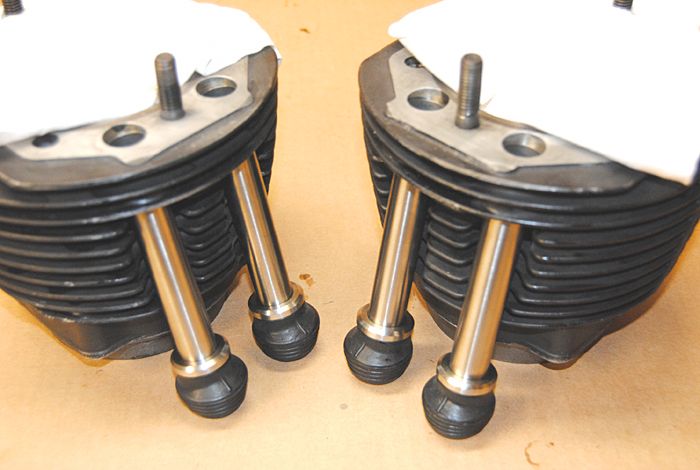
New grommets have a light coating of oil on the inside. Pistons and rings are back in their bores. Final assembly is on short final. This
stop weep project went well beyond initial expectations.




